Understanding the Internet of Things (IoT): How Connected Devices Are Shaping Our World
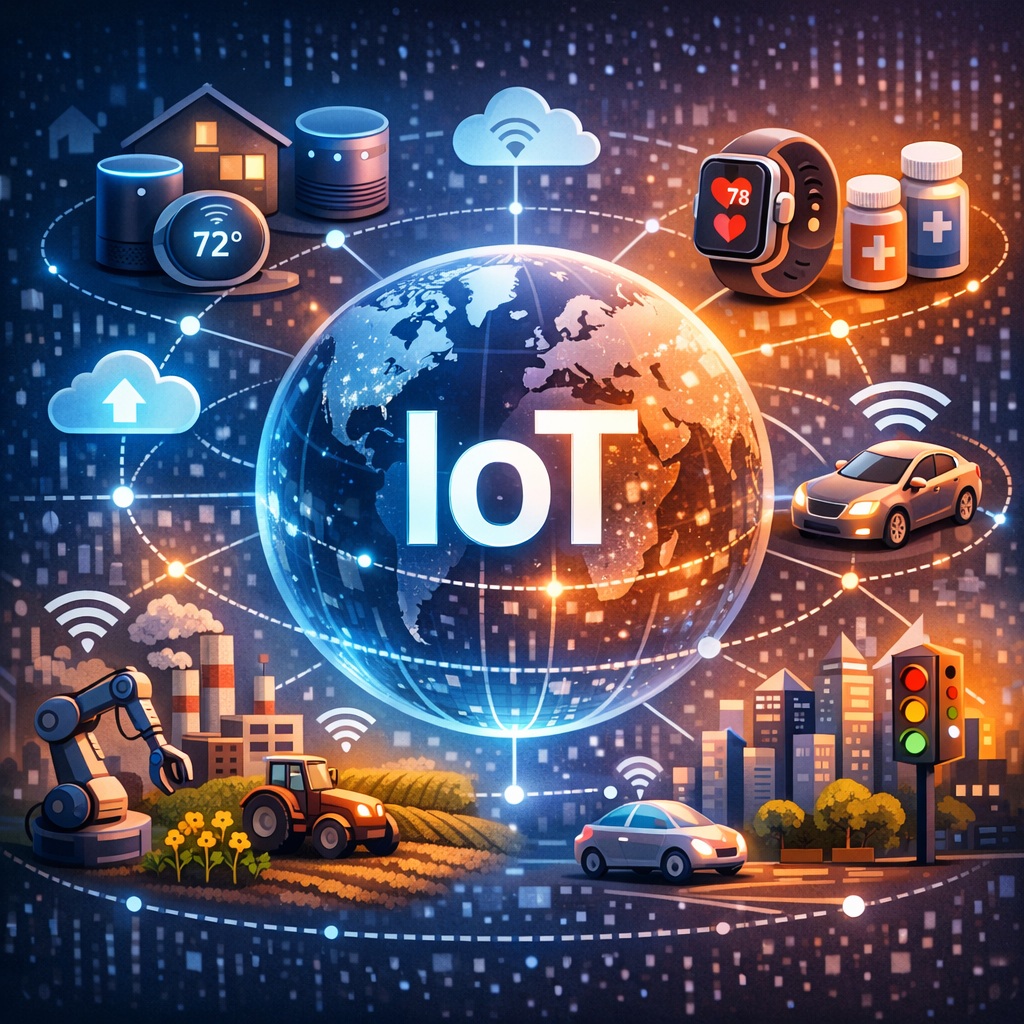
The Internet of Things (IoT) is no longer a futuristic concept—it’s already woven into our daily lives. From smartwatches tracking our health to intelligent traffic systems managing congestion, IoT is quietly transforming how we live, work, and interact with technology.
But what exactly is IoT, and why does it matter so much?
What Is the Internet of Things?
The Internet of Things (IoT) refers to a network of physical objects—“things”—that are embedded with sensors, software, and connectivity. These devices collect and exchange data over the internet, often without requiring human intervention.
Examples include:
- Smart home devices like thermostats and security cameras
- Wearables such as fitness trackers and smartwatches
- Industrial sensors monitoring machinery performance
- Connected vehicles and traffic systems
The key idea is simple: everyday objects become “smart” by gathering data and communicating with other systems.
How IoT Works
An IoT system typically follows this flow:
- Sensors collect data (temperature, movement, heart rate, etc.)
- Connectivity sends the data to the cloud or a local server
- Data processing analyzes the information
- Actions are triggered—automatically or through user input
For example, a smart thermostat senses room temperature, sends the data online, and adjusts heating or cooling to maintain comfort while saving energy.
Key Applications of IoT
IoT is impacting nearly every industry:
Smart Homes
IoT enables automated lighting, climate control, and security, making homes more efficient and comfortable.
Healthcare
Wearable devices and remote monitoring systems help track patient health in real time, improving care and reducing hospital visits.
Manufacturing and Industry (IIoT)
Factories use IoT to monitor equipment, predict maintenance needs, and optimize production processes.
Transportation
Connected vehicles and smart traffic systems improve safety, reduce congestion, and enhance fuel efficiency.
Agriculture
Farmers use IoT sensors to monitor soil moisture, crop health, and weather conditions, leading to better yields and resource management.
Benefits of IoT
- Automation and efficiency – Tasks are performed faster and with less manual effort
- Data-driven decisions – Real-time insights improve planning and performance
- Cost savings – Predictive maintenance and energy optimization reduce expenses
- Improved user experience – Personalized and responsive systems enhance convenience
Challenges and Concerns
Despite its benefits, IoT also raises important challenges:
- Security risks – Connected devices can be vulnerable to cyberattacks
- Privacy issues – Large amounts of personal data must be handled responsibly
- Interoperability – Devices from different manufacturers don’t always work seamlessly together
Addressing these concerns is essential for sustainable IoT growth.
The Future of IoT
As technologies like 5G, artificial intelligence, and edge computing evolve, IoT will become even more powerful. We can expect smarter cities, more personalized healthcare, and highly autonomous systems that adapt in real time.
IoT isn’t just about connecting devices—it’s about connecting data, insights, and actions to create a more efficient and intelligent world.
Final Thoughts
The Internet of Things is reshaping industries and everyday life by turning ordinary objects into intelligent systems. While challenges remain, its potential to improve efficiency, safety, and quality of life is enormous. As IoT continues to evolve, staying informed and prepared will be key to making the most of this connected future.