Network Solutions: The Backbone of Modern Websites
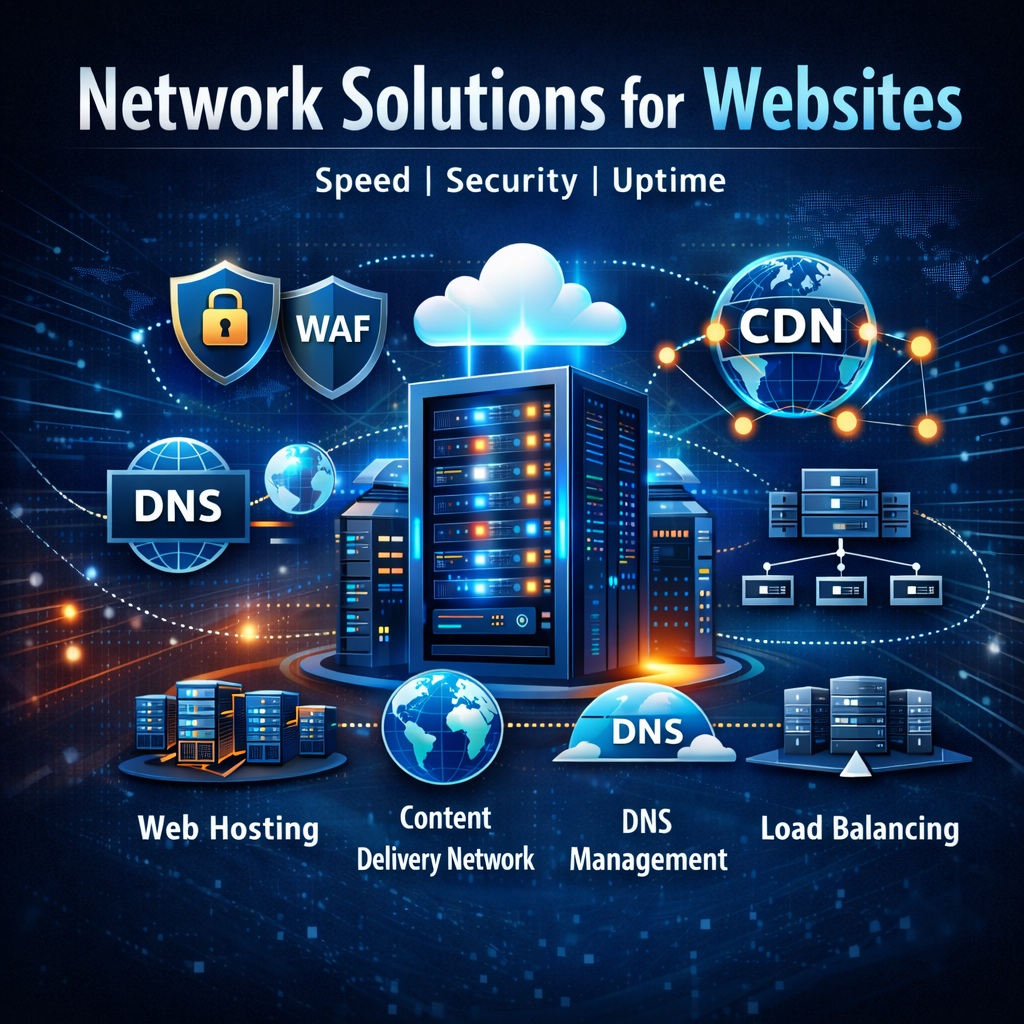
In today’s digital world, a website is more than just design and content — it relies on strong, reliable network infrastructure to perform smoothly. Whether you’re running a personal blog, an e-commerce store, or a corporate platform, network solutions play a critical role in speed, security, and uptime.
In this article, we’ll explore what network solutions are, why they matter, and which technologies are essential for modern websites.
What Are Network Solutions?
Network solutions refer to the technologies, services, and infrastructure that enable websites to connect, communicate, and operate efficiently over the internet. These solutions ensure that data travels securely and quickly between servers and users.
They include:
- Web hosting infrastructure
- Domain Name System (DNS) management
- Content Delivery Networks (CDNs)
- Firewalls and security systems
- Cloud networking services
- Load balancing and traffic management
1. Reliable Web Hosting Infrastructure
The foundation of any website begins with hosting. Your hosting provider stores your website’s files and makes them accessible online.
Common hosting types include:
- Shared Hosting – Affordable, but resources are shared.
- VPS (Virtual Private Server) – More control and better performance.
- Dedicated Server – Maximum performance and security.
- Cloud Hosting – Scalable and flexible for growing businesses.
Modern providers like Amazon Web Services, Google Cloud, and Microsoft Azure offer scalable infrastructure designed for high availability and global performance.
2. DNS Management
The Domain Name System (DNS) translates your website’s name into an IP address that browsers can understand. A fast and secure DNS service reduces loading time and protects against attacks.
Premium DNS providers improve:
- Website speed
- Reliability
- DDoS protection
- Global accessibility
3. Content Delivery Networks (CDN)
A CDN distributes your website content across multiple global servers. When a user visits your site, content is delivered from the closest server location, improving load speed and performance.
Popular CDN providers include Cloudflare and Akamai Technologies.
Benefits of CDNs:
- Faster page loading
- Reduced server load
- Improved SEO rankings
- Enhanced security
4. Network Security & Firewalls
Security is a major concern for website owners. Network security solutions protect websites from:
- DDoS attacks
- Malware
- Data breaches
- Unauthorized access
Web Application Firewalls (WAF) and SSL certificates encrypt data and block malicious traffic. Secure network architecture builds user trust and protects sensitive information.
5. Load Balancing & Traffic Management
As traffic grows, websites must handle multiple user requests simultaneously. Load balancers distribute incoming traffic across several servers, preventing overload and downtime.
Advantages include:
- Improved uptime
- Better performance under high traffic
- Scalability
- Business continuity
6. Cloud Networking & Scalability
Cloud-based network solutions allow businesses to scale resources up or down based on demand. This flexibility is essential for:
- E-commerce websites during promotions
- Viral content traffic spikes
- Growing startups
Cloud networking ensures your website remains stable even during unexpected traffic surges.
Why Network Solutions Matter for SEO
Website speed, uptime, and security directly affect search engine rankings. Google prioritizes fast and secure websites, making strong network infrastructure a key part of technical SEO strategy.
Better network performance leads to:
- Lower bounce rates
- Higher user engagement
- Improved conversion rates
- Better search engine visibility
Final Thoughts
Network solutions are the invisible engine behind every successful website. While users may only see design and content, the underlying network infrastructure determines performance, reliability, and security.
Investing in reliable hosting, CDN services, DNS management, and security solutions ensures your website runs efficiently — providing a seamless experience for users and better results for your business.
In a competitive digital environment, strong network solutions aren’t optional — they’re essential.